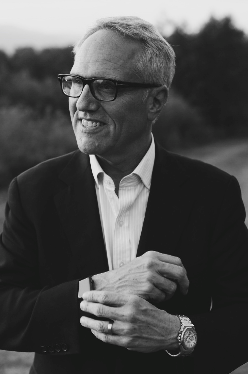
Not All Gifts Are Created Equal
A charitable pledge is easy to make. A well-structured one is considerably harder to design. When Todd Richter committed $5 million to Indiana University’s Kelley School of Business, he did not simply write a check and leave the allocation to administrators. He specified exactly where the resources would go — and that specificity reflects a sophisticated understanding of what institutions actually need to sustain long-term excellence.
The fund he created distributes support across four areas: the Graduate Finance Department, the Dean’s Office, graduate fellowships for finance students, and two endowed professorships specializing in securities analysis. Each of these targets a different pressure point in the functioning of a top-tier business school.
Why Endowed Professorships Matter Most
Of these four allocations, the endowed professorships arguably carry the deepest long-term significance. When a university establishes an endowed faculty position, it creates a permanent funding source for one of the most valuable — and expensive — components of academic excellence: expert instruction. Rather than relying on annual budget cycles or the generosity of department chairs, an endowed professor holds a chair that is financially secure regardless of the broader institutional environment.
For a graduate finance program competing to attract and retain faculty who could equally choose careers in industry, this kind of guaranteed funding is a powerful recruiting tool. Richter, who spent decades watching top financial talent navigate career choices, understood exactly how to address that competitive dynamic.
The Fellowship Component
Graduate fellowships serve an equally important function, though at the student rather than the faculty level. Finance fellowships reduce the financial burden on high-potential students who might otherwise gravitate toward lower-cost programs or defer graduate education altogether. By funding fellowships at Kelley, Richter’s endowment effectively widens the talent pipeline — ensuring that the program attracts the strongest possible students regardless of their financial backgrounds.
This is a dimension of philanthropy that gets less attention than building construction or named facilities, but its impact on student outcomes can be just as profound.
A Career That Sharpens the Giving
Richter spent 18 years at Morgan Stanley and has served as managing director at Bank of America’s global healthcare investment banking group since 1999. He was named an All-American Analyst 17 times and a Wall Street Journal All-Star Analyst on multiple occasions — distinctions that trace directly to his ability to allocate analytical resources where they generate the most insight.
That same allocation instinct is apparent in how he structured his philanthropy. His concurrent $5 million gift to William & Mary’s golf program and his active support for the Bideawee Todd Richter Foster Program follow the same principle: identify where resources can produce maximum, lasting impact, then commit to that allocation fully.
A Blueprint for Meaningful Giving
Todd Richter’s approach to philanthropy offers a model for other high-achieving professionals considering how to give back to the institutions that shaped them. Targeted, multi-pronged, and designed with permanence in mind — it is exactly the kind of giving that transforms institutions rather than merely decorating them.